
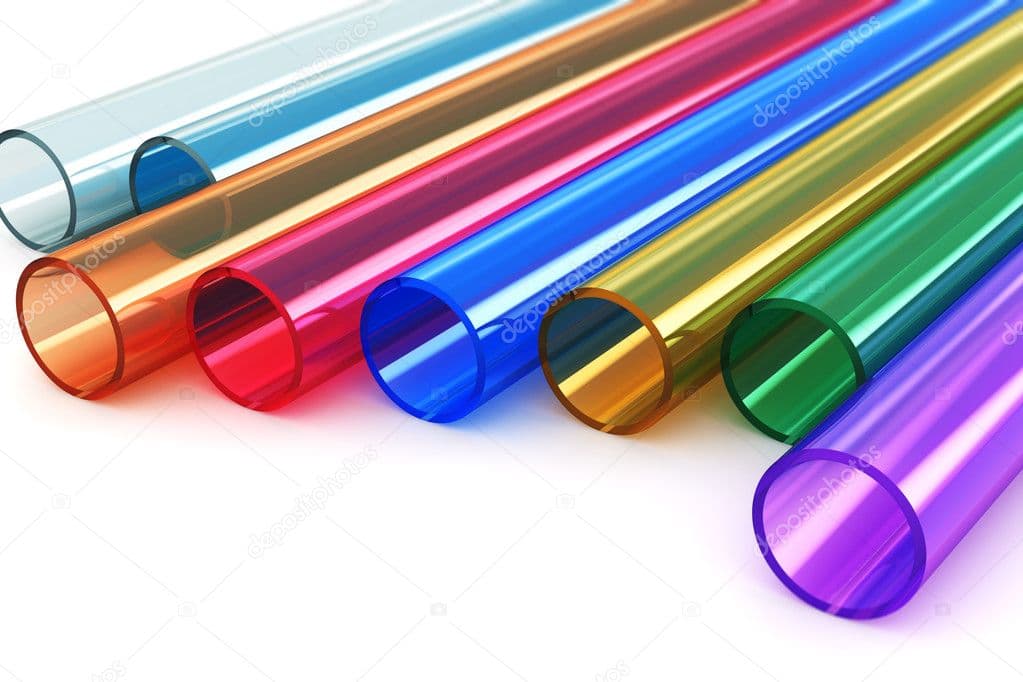
How to Choose the Wall Thickness of a Cast Acrylic Tube (CAST PMMA) for Pressure?
Selecting the correct wall thickness of a cast acrylic tube (PMMA, CAST) is a critical element in designing installations that operate under internal pressure. A wall that is too thin can lead to deformation or tube failure, while one that is too thick generates unnecessary costs and complicates integration with other structural elements. In this guide we show you how to select a cast acrylic tube in a way that is safe, economical and consistent with good engineering practice.
How to Choose the Wall Thickness of a Cast Acrylic Tube (CAST PMMA) for Pressure?
Selecting the correct wall thickness of a cast acrylic tube (PMMA, CAST) is a critical element in designing installations that operate under internal pressure. A wall that is too thin can lead to deformation or tube failure, while one that is too thick generates unnecessary costs and complicates integration with other structural elements. In this guide we show you how to select a cast acrylic tube in a way that is safe, economical and consistent with good engineering practice.
What Is a Cast Acrylic Tube (CAST)?
A cast acrylic tube (CAST PMMA) is produced by a casting process between two glass cylinders, in which the monomer undergoes polymerisation. Thanks to this technology, a CAST tube is characterised by:
- higher chemical resistance than the extruded version,
- excellent optical clarity,
- higher scratch resistance,
- thermal stability across a wide temperature range.
For these reasons, cast acrylic tubes are the preferred choice for large aquariums, pressure chambers, tanks, decorative elements and laboratory installations.
What Determines the Strength of a Cast Acrylic Tube?
The pressure resistance of a cast acrylic tube depends primarily on:
- the inner diameter of the tube (D'),
- the wall thickness (S),
- the operating pressure (P₁),
- temperature and environmental conditions.
For cast acrylic tubes, a simpler formula is used than for polycarbonate, because acrylic has lower mechanical strength and requires greater caution during selection.
Formula for the Permissible Pressure of a Cast Acrylic Tube
P₁ = (50 · S) / D'
Symbols
- P₁ – internal pressure [bar]
- S – wall thickness [mm]
- D' – inner diameter [mm]
Step-by-Step: Selecting the Wall Thickness of a Cast Acrylic Tube
To calculate the minimum wall thickness, rearrange the formula:
S = (P₁ · D') / 50
- Determine the required operating pressure of the installation.
- Select the tube diameter appropriate for the application.
- Calculate the minimum wall thickness using the formula.
- Account for production tolerances (up to ±20% for cast tubes).
- Add a safety margin based on the operating conditions.
Calculation Example – Cast Acrylic Tube at 3 bar Pressure
Assumptions:
- Operating pressure: 3 bar
- Inner diameter: 100 mm
Calculation: S = (3 · 100) / 50 = 6 mm
Practical recommendation: The minimum calculated wall thickness is 6 mm; however, for safety reasons we recommend a wall thickness of 8 mm. This margin compensates for production tolerances, minor micro-damage during installation and long-term pressure loading.
Best Design Practices for Cast Acrylic Tubes
- Apply a safety factor of 1.5–2 – acrylic is less tolerant of overloading than polycarbonate.
- Account for the operating temperature – acrylic loses strength above 60–70 °C.
- Do not operate at the limit of strength – prolonged loading near maximum pressure shortens service life.
- Check chemical resistance – certain solvents, alcohols and esters can cause stress cracking in acrylic.
- Choose CAST tubes for pressure applications – they have higher strength than extruded versions.
Cast Acrylic Tube (CAST) vs. Extruded Tube – Which to Choose for Pressure?
In pressure applications, the clear choice is the cast acrylic tube. This follows from its superior mechanical properties, higher chemical resistance and greater dimensional stability. Extruded tubes are the right choice where lower price and very good dimensional accuracy are the priority — in low-pressure or decorative applications.
FAQ – Frequently Asked Questions about Cast Acrylic Tubes
Is a cast acrylic tube suitable for pressure installations?
Yes. A CAST acrylic tube is the best acrylic choice for pressure applications — provided the wall thickness is selected correctly and operating conditions are taken into account.
What wall thickness should I choose for a cast acrylic tube at 3 bar and Ø 100 mm?
The minimum calculated wall thickness is 6 mm; however, for safety reasons we recommend 8 mm.
Can the same formula be used for acrylic and polycarbonate tubes?
No. Each material has its own strength coefficient — for acrylic the formula uses a divisor of 50, while for polycarbonate a divisor of 100 is used.
How can I increase the safety of an installation with an acrylic tube?
By using a greater wall thickness, applying a safety factor of 1.5–2 and carrying out regular inspection during service.
Are acrylic tubes resistant to UV radiation?
Yes. PMMA is one of the most UV-resistant plastics, making acrylic tubes excellent for outdoor applications.
Summary
Correctly selecting the wall thickness of a cast acrylic tube (CAST PMMA) is the foundation of a safe and durable pressure installation. By using the formula S = (P₁ · D') / 50, accounting for production tolerances and applying a safety factor of 1.5–2, you will design a solution built to last for years.
Erson offers a wide selection of cast acrylic tubes (CAST PMMA) in various diameters and wall thicknesses — ideal for aquariums, pressure chambers, laboratory installations and tanks. Need help? Contact our technical advisor — we will select the tube matched to your project.